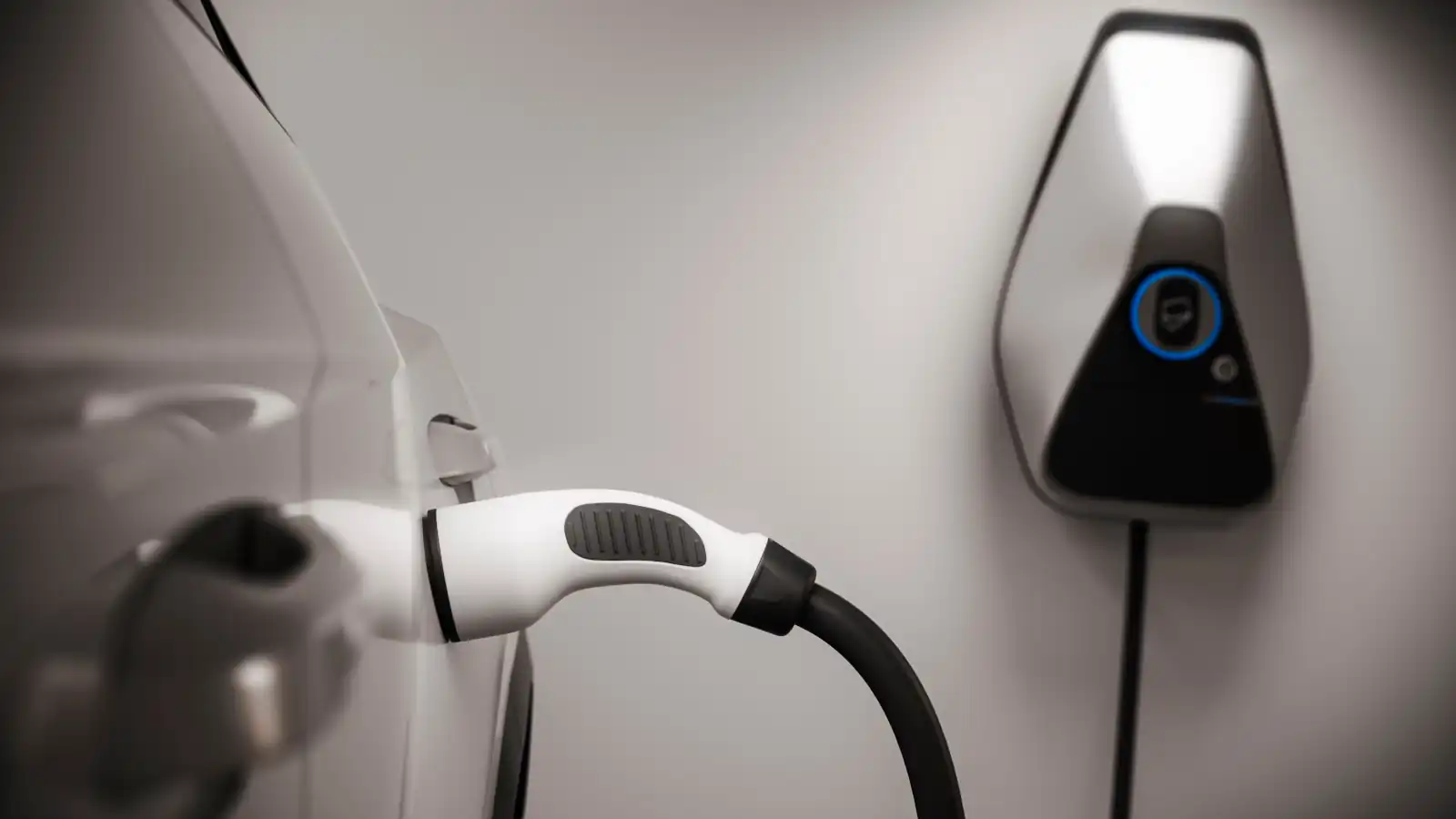
What Is The SAE J1772 Connector?
Learn what the SAE J1772 plug is, how it enables Level 1 and Level 2 charging, and why this North American standard matters for charging your electric vehicle at home and on the go.
Schedule Your Free Consultation!
Understanding the SAE J1772 Standard
SAE J1772 is the standardized connector used for AC charging on most non‑Tesla EVs sold in North America. J1772 defines the physical plug shape, pin layout, and communication protocols for safe Level 1 and Level 2 charging. Inside the connector are power pins for delivering AC electricity and smaller pins that handle control signals, allowing the car and charger to negotiate current limits, verify a safe connection, and start or stop charging automatically.
How the J1772 Plug Works With Your EV
The SAE J1772 interface supports both Level 1 and Level 2 charging, making it the go-to solution for residential and workplace setups.
When you connect the J1772 handle, the control pilot and proximity pins confirm latch status and allowable current. Your EV’s onboard charger then converts the AC power to DC to charge the battery while honoring the current limits provided by the station.
Although J1772 charging power depends on the EV and circuit capacity, Level 2 via J1772 is ideal for daily use—your vehicle can recover most or all of its range during typical overnight parking.
Common J1772 Charging Scenarios
- Level 1: Uses a standard 120V outlet with a J1772 portable EVSE for slow, convenient top-ups.
- Level 2: Uses a 208–240V circuit and a J1772 wall or pedestal charger for significantly faster home or workplace charging.
- Home charging: Most residential stations use J1772 connectors, offering broad compatibility across major EV brands.
J1772 vs. DC Fast Charging Connectors
While the J1772 plug is designed for AC charging, DC fast charging uses different connectors that bypass the onboard charger to send DC power directly to the battery.
Because DC connectors handle much higher power, they are physically larger and integrate additional pins. J1772 focuses on safe, reliable AC charging for daily needs, while DC systems prioritize rapid energy delivery during short stops.
DC fast charging is primarily found at public charging stations along highways. Many vehicles combine a J1772 inlet for AC with a separate DC interface below it, enabling both charging methods on one port assembly.
Is J1772 Right for Your EV?
For most drivers, yes—J1772 covers everyday AC charging needs at home and work.
| SAE J1772 (AC) | DC Fast Connectors |
|---|---|
| Ideal for residential and workplace charging | Ideal for quick public charging |
| Moderate charging speeds via onboard charger | Much higher charging speeds via external rectification |
| Used for Level 1 and Level 2 | Often referred to as Level 3/fast charging |
| Perfect for overnight or routine top-ups | Great for road trips and time-sensitive stops |
| Compact, widely compatible, cost-effective | Larger equipment, higher infrastructure cost |
For daily reliability, Level 2 J1772 charging is the most practical setup for homeowners. When you need rapid range on a trip, use compatible DC fast charging. Car Charger Specialists can help you select and install the right J1772 station, verify circuit capacity, and optimize placement for convenience and safety.
Does the SAE J1772 Connector Support Fast Charging?
The SAE J1772 connector is the North American standard for AC charging on most non-Tesla electric vehicles. It is engineered for Level 1 and Level 2 AC power and works with a vehicle’s onboard charger, which manages current, voltage, and temperature to protect the battery during everyday charging.
J1772 itself does not deliver DC fast charging; high-power DC uses separate connectors such as CCS or NACS. For routine charging, many EV owners rely on J1772 Level 2 because it’s battery-friendly and convenient at home or work. When rapid charging is required on the road, drivers typically switch to compatible DC standards supported by their vehicle.
30+ Years of experience
Licensed & Trusted by thousands
SAE J1772 Connector FAQs
What exactly is the SAE J1772 connector?
SAE J1772 is the standardized plug for AC charging in North America. It supports Level 1 (120V) and Level 2 (240V) charging and includes control pins that communicate with the station to regulate current safely.
Is J1772 for AC or DC charging?
J1772 is an AC electricity interface. Your vehicle’s onboard charger converts that AC to DC to store energy in the battery.
How does J1772 relate to CCS fast charging?
CCS, often called DC fast charging, builds on the J1772 design by adding two larger DC pins beneath the J1772 AC portion. That combined plug allows direct DC power to the battery for rapid charging, whereas J1772 alone is AC-only.
Can my EV use J1772 and other connectors?
Yes. Most EVs in North America include a J1772 inlet for AC charging and may also support DC fast charging via CCS or NACS depending on the model. Adapters are available for certain use cases, but compatibility varies by vehicle.
Is home charging with J1772 cost-effective?
Charging with a J1772 Level 2 station at home is typically the most economical and convenient option. Costs depend on your local electricity rates and time-of-use plans, but home AC charging is usually less expensive than public DC fast charging.
SAE J1772: The Bottom Line
J1772 is the everyday AC charging standard for North American EVs. It delivers reliable Level 1 and Level 2 charging through your vehicle’s onboard charger, while fast road-trip charging is handled by DC-capable standards like CCS or NACS when supported by your car.
Knowing how J1772 fits with Level 1, Level 2, and Level 3 charging helps you choose the right equipment, cables, and adapters—and ensures your EV stays compatible with today’s charging networks. Car Charger Specialists can design and install the right J1772 setup for your home or business.