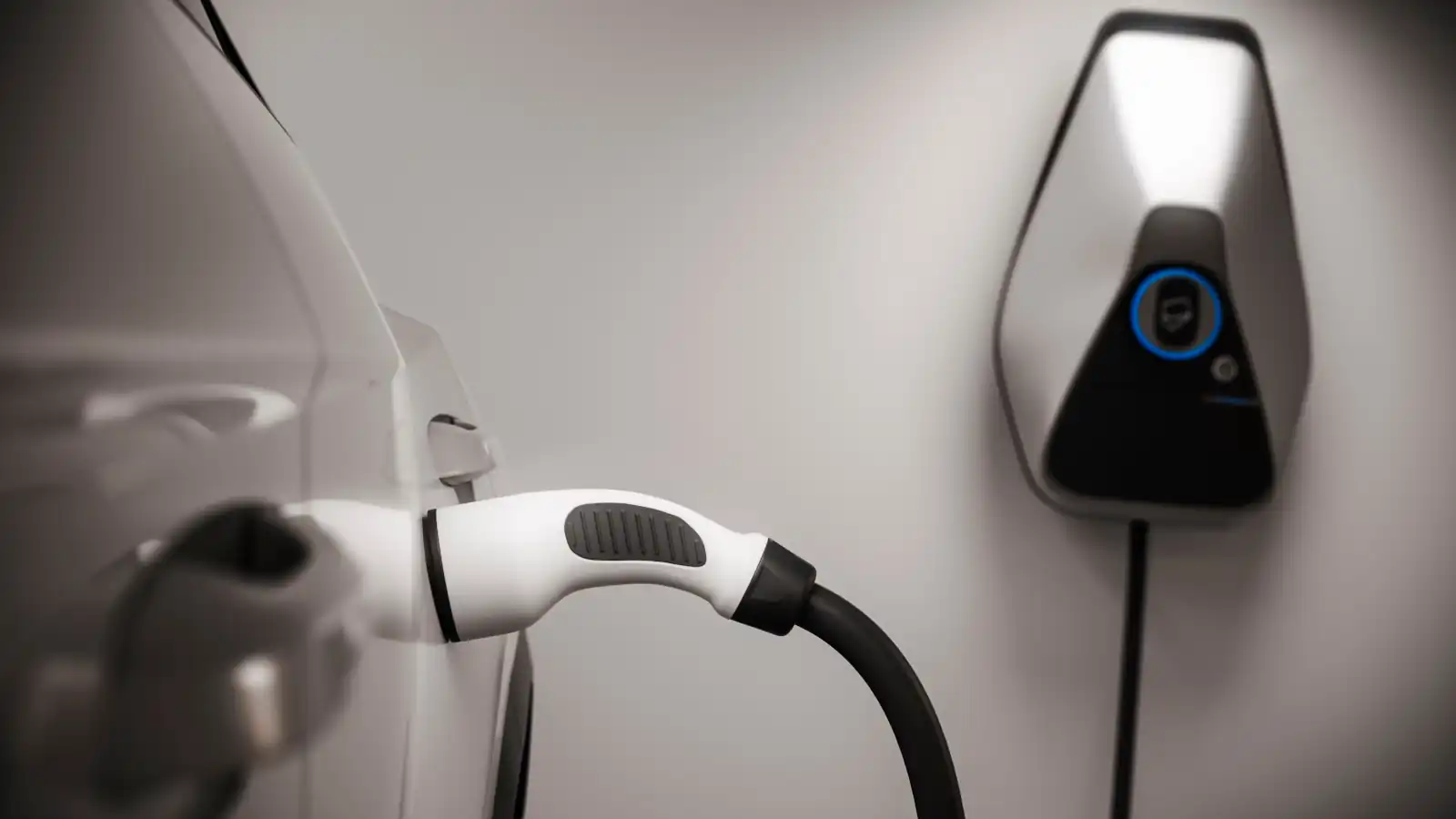
AC vs. DC EV Charging
Understand the difference between AC and DC charging, how each works, and which option makes sense for charging your electric vehicle.
Schedule Your Free Consultation!
What Is the Difference Between AC and DC Charging?
The main difference between AC and DC EV charging is where the electricity is converted before it reaches the battery. AC charging sends alternating current to the vehicle, where the EV’s onboard charger converts it to DC electricity for the battery. DC charging performs that conversion inside the charging station and sends DC electricity directly to the battery. This allows DC chargers to deliver much higher charging speeds than typical AC chargers.
How AC EV Charging Works
AC charging is used by both Level 1 and Level 2 chargers and is the most common type of charging for homes.
When you plug your EV into an AC charger, electricity travels to the vehicle’s onboard charger. The onboard charger converts the AC power into DC power that the battery can store.
AC charging is generally slower than DC fast charging, but that isn’t necessarily a disadvantage. For home charging, your vehicle may be parked for several hours overnight, making Level 2 AC charging a convenient and practical solution for most drivers.
Common AC Charging Options
- Level 1: Uses a standard household outlet and provides the slowest charging speed.
- Level 2: Uses a higher-voltage electrical circuit and provides substantially faster charging.
- Home charging: Most residential EV chargers use Level 2 AC power.
How DC EV Charging Works
DC charging, commonly called DC fast charging, sends direct current to the vehicle’s battery without relying on the vehicle’s onboard AC charger to perform the conversion.
Because the conversion happens within the charging station, DC chargers can deliver significantly more power. This makes them especially useful when you need to add a large amount of driving range in a relatively short period.
DC fast charging is primarily found at public charging stations, particularly along highways and major travel routes.
AC vs. DC Charging: Which Is Better?
Neither type is universally better. They serve different purposes.
| AC Charging | DC Charging |
|---|---|
| Best for home and workplace charging | Best for quick public charging |
| Lower charging speeds | Much higher charging speeds |
| Commonly Level 1 or Level 2 | Commonly called Level 3 |
| Ideal for overnight charging | Ideal for road trips |
| Generally simpler and less expensive | Charging equipment is more complex |
For everyday charging, AC Level 2 is usually the most practical choice for homeowners. For long-distance travel or situations where you need substantial range quickly, DC fast charging is the better option.
Does DC Fast Charging Hurt the Battery?
Using DC fast charging does not automatically damage an EV battery. Modern electric vehicles use sophisticated battery management systems to control charging based on battery temperature, state of charge, and other conditions.
However, frequent high-power charging can have different effects on battery aging than slower AC charging. For everyday charging, many EV manufacturers recommend using Level 2 AC charging when practical and using DC fast charging when you need the speed.
30+ Years of experience
Licensed & Trusted by thousands
AC vs. DC Charging FAQs
Is AC or DC charging better for an EV?
Neither is universally better. AC charging is typically best for everyday charging at home or work, while DC charging is designed to add range quickly during longer trips or when you need a faster charge.
Is Level 2 AC or DC?
Level 2 charging uses AC electricity. The vehicle’s onboard charger converts that AC power into DC electricity that can be stored in the battery.
Is Level 3 charging AC or DC?
Level 3 charging refers to DC fast charging. Unlike Level 1 and Level 2 charging, DC fast chargers convert electricity at the charging station and deliver DC power directly to the vehicle’s battery.
Can I charge my EV with both AC and DC?
Yes. Most modern EVs are designed to support AC charging for everyday use and DC fast charging for quicker charging when needed. The exact charging speeds and connector types depend on the vehicle.
Is DC charging more expensive than AC charging?
DC fast charging typically costs more per charging session or per unit of energy than charging at home with AC power. However, pricing varies by charging provider, location, and electricity rates.
AC vs. DC Charging: The Bottom Line
AC charging is generally best for routine charging, while DC charging is designed for speed. Most EV owners will use AC charging at home or work and rely on DC fast charging when traveling or when they need to quickly add range.
Understanding this distinction also makes it easier to compare Level 1, Level 2, and Level 3 charging, as well as the different EV connectors and charging standards used today.