
EV Car Charger Installation for Your Home
EV car charger installation lets you charge your electric vehicle safely, quickly, and conveniently at home instead of relying on public stations. An expertly installed home EV charger turns your driveway or garage into your own reliable “fueling” station and helps protect your electrical system at the same time.
Schedule Your Free Consultation!
Why Install a Home EV Car Charger?
Installing a dedicated EV charger at home is one of the best upgrades you can make as an EV owner. It gives you:
- aFaster charging than a standard wall outlet, especially with Level 2 charging.
- The convenience of plugging in at night and starting each morning with a full battery.
- Less wear and tear on your electrical system compared to makeshift or overloaded outlets.
- More control over charging times, so you can use off‑peak electricity rates when available.
A professional EV charger installation also ensures your setup meets electrical code, is properly grounded, and is sized correctly for your vehicle and your home.
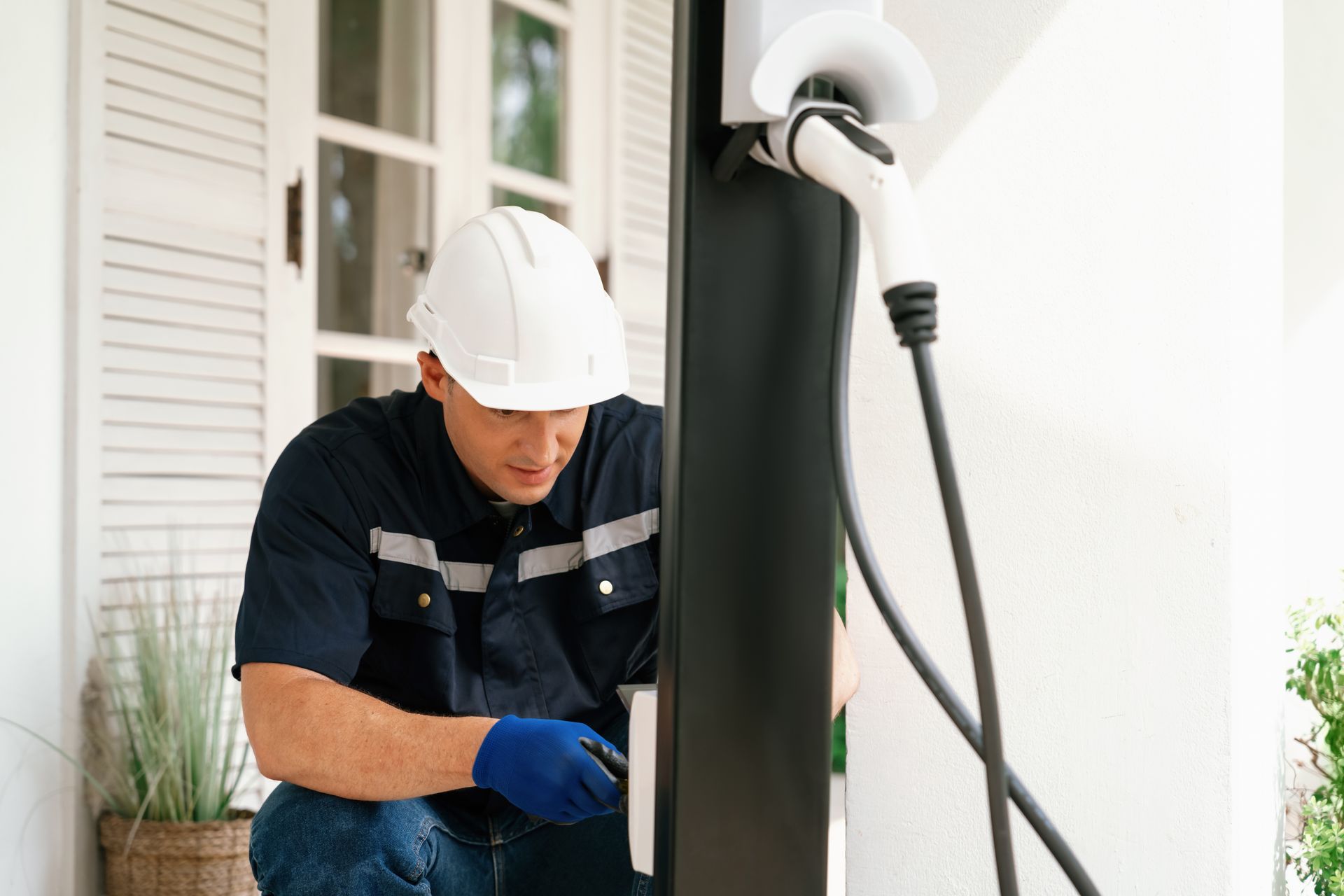
Level 1 vs. Level 2 EV Chargers
Most homeowners choose between two main types of EV car chargers:
- Level 1 chargers use a standard 120‑volt outlet and are typically included with the vehicle. They are slow and best for light daily driving or as a backup option.
- Level 2 chargers use a 240‑volt circuit (similar to an electric dryer) and offer much faster charging, making them ideal for daily commuting, families with multiple drivers, or anyone who puts serious miles on their electric vehicle.
A licensed installer will help you decide which EV charging solution fits your driving habits, how long the car is parked at home, and your long‑term plans (such as adding another EV later).
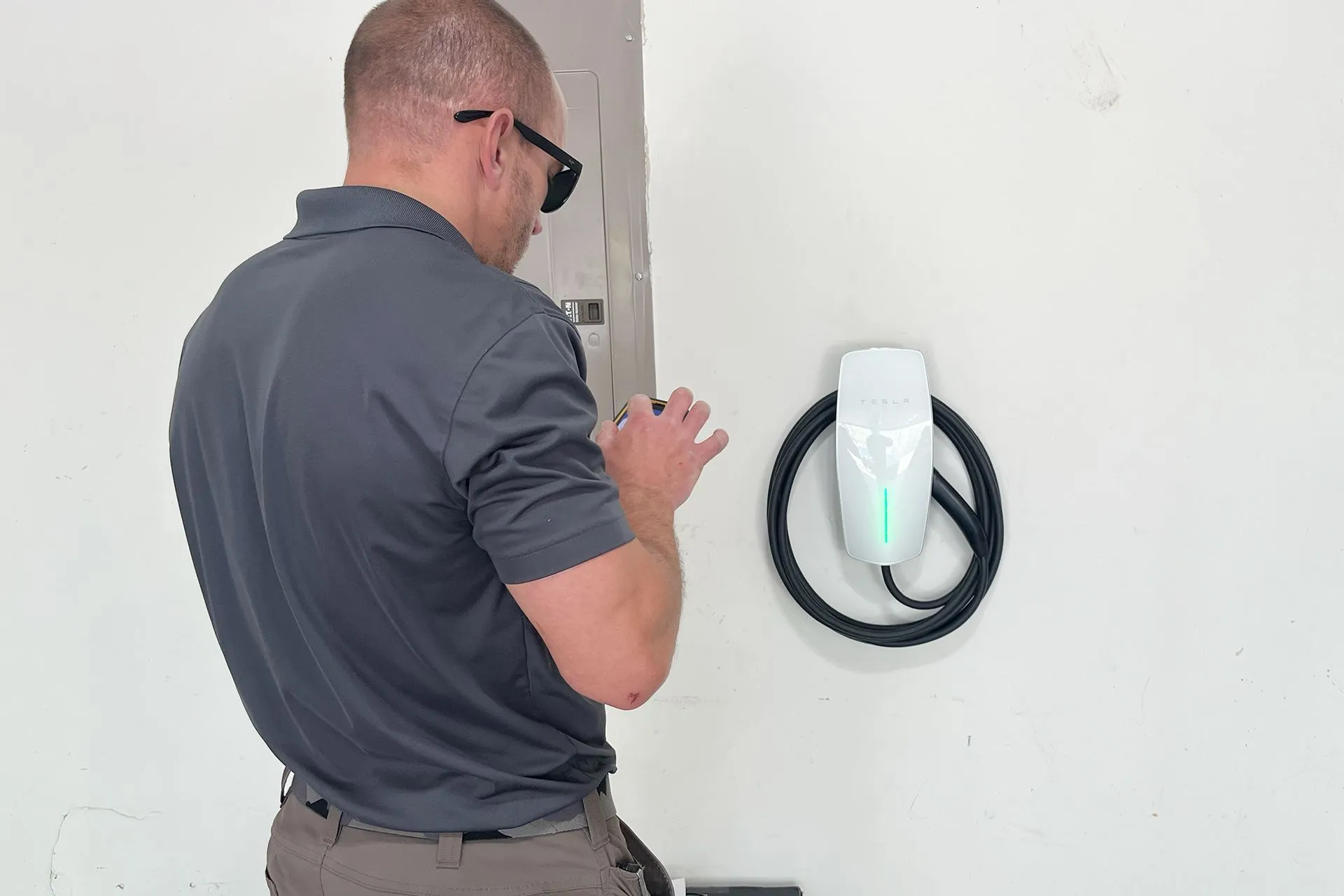
Where Can a Home EV Charger Be Installed?
Every property is different, so EV car charger placement is customized to your layout:
- Attached or detached garages
- Carports or covered parking areas
- Exterior walls next to driveways or side parking pads
- Dedicated spaces for multiple vehicles or future EVs
Good placement keeps the charging cable off walkways where it can be a tripping hazard, protects the charger from weather when possible, and makes plugging in a simple, everyday habit.
Our EV Car Charger Installation Process
A safe, code‑compliant EV charger installation follows a clear, step‑by‑step approach:
Site visit and electrical assessment
- Review your main service size and electrical panel.
- Check existing large loads (HVAC, range, dryer, etc.).
- Look at where you park and how a charger can be mounted and wired.
Charger selection and circuit design
- Recommend the right charger amperage and features for your EV and your panel.
- Design a dedicated circuit with the appropriate breaker, wire size, and protection.
- Plan routing for conduit or cable to keep the installation neat and out of the way.
Permits and code compliance
- Obtain any required electrical permits from your local jurisdiction.
- Install the circuit and EV charging station in line with current electrical codes.
- Label breakers and equipment for safety and future service.
Testing and walkthrough
- Test the charger under load with your vehicle.
- Show you how to plug in, start and stop a charging session, and interpret indicator lights or app features.
- Review simple maintenance and safety tips.
This process helps reduce surprises, keeps your home protected, and makes the most of your existing electrical capacity.
What Affects the Cost of EV Charger Installation?
The cost of installing an EV car charger at home can vary, but several predictable factors influence the final price:
- Distance from your electrical panel to the charger location
- Whether your panel has open breaker spaces or needs upgrades
- The charger’s amperage and features (such as Wi‑Fi and smart controls)
- How complex the wiring path is (through finished walls, attic, crawlspace, or trenching outside)
A straightforward installation in a newer home with a panel in the garage will usually cost less than a project that requires panel upgrades and a long run of conduit to a detached garage or rear parking pad. A written estimate should clearly list labor, materials, and any permit fees so you know exactly what you’re paying for.
Benefits of Professional EV Charger Installation
Hiring a professional EV charger installer offers advantages beyond simply “making it work”:
- Ensures safe, code‑compliant wiring for high, continuous electrical loads.
- Reduces the risk of overheating outlets, nuisance breaker trips, or premature equipment failure.
- Protects your investment in both your EV and your home’s electrical system.
- Helps preserve manufacturer warranties that may require proper installation.
A well‑designed EV charging setup can also support future upgrades, such as adding another charger, upgrading to a higher‑amperage unit, or integrating with load‑management or energy‑monitoring systems.
30+ Years of experience
Licensed & Trusted by thousands
Frequently Asked Questions
Do I really need a Level 2 charger at home?
If you drive only a few miles per day and can leave your car plugged into a standard outlet for many hours, you might manage with Level 1 charging. However, most EV owners prefer Level 2 because it offers significantly faster charging, better supports heavier daily use, and provides more flexibility when schedules change.
Can my current electrical panel handle a home EV charger?
That depends on your service size, how many large appliances you already have, and how much spare capacity is available. A load calculation will show whether your panel can safely support a new EV circuit or if a panel or service upgrade is recommended.
How long does it take to install an EV charger?
Once permits are in place and materials are ready, many standard home EV charger installations can be completed in a few hours. More complex projects that involve panel upgrades, long conduit runs, or work in finished spaces may take most of a day.
Can I install an EV charger myself?
Because EV chargers draw a significant, continuous electrical load, most manufacturers and local codes strongly recommend or require installation by a qualified electrician. Professional installation helps ensure safety, code compliance, and proper performance—especially for higher‑amperage Level 2 chargers.
