
What Businesses Need To Know About Installing EV Charging Stations
Electric vehicle (EV) adoption is accelerating, and businesses of all sizes are realizing they need on‑site EV charging to stay competitive. Installing EV charging stations the right way requires careful planning around installation costs, electrical service, and the type of charging that fits your property. This guide explains what you should know before investing in commercial EV charging infrastructure.


5.0 Stars
832 Reviews
Why Businesses Are Installing EV Charging Stations
Adding an EV charger or an entire bank of chargers is about more than checking a sustainability box. As EV adoption grows, charging station installations deliver tangible business value:
- Attract and retain customers and tenants – Drivers increasingly choose destinations where they can charge an electric vehicle while they shop, work, or stay, which can improve loyalty and occupancy.
- Increase dwell time and on‑site spending – When visitors stay longer to charge, they have more time to spend in your stores, restaurants, or services, boosting revenue.
- Support employees and fleets – Workplace charging can be a high‑value perk for staff and a core part of fleet electrification plans.
- Demonstrate sustainability leadership – Visible EV charging infrastructure supports ESG goals and signals that your business is planning for the future.
- Create new revenue opportunities – With networked charging equipment and software, you can bill for sessions, time, or energy use, making it easier to justify upfront installation costs.

Types of EV Chargers: Level 1, Level 2, and DC Fast Charging
Choosing the right type of charging is one of the most important decisions you will make.
- Level 1 chargers use standard 120‑volt outlets and provide only a few miles of range per hour. They are usually too slow for most commercial settings, but may serve as a backup in low‑demand areas.
- Level 2 charger options operate on 208–240 volts and typically deliver 25–40 miles of range per hour, making them ideal for workplaces, multifamily communities, hotels, and shopping centers where vehicles sit for several hours.
- A DC fast charger (sometimes called Level 3) delivers high‑power direct current for much faster charging, and is best suited to high‑turnover sites like travel centers, highway corridors, and some retail hubs.
Most businesses start with a mix of Level 2 and DC fast charging tailored to their parking patterns, then expand the charging system as EV adoption on their property increases.

What Goes Into a Commercial Charging Installation
Installing EV charging stations is not as simple as hanging a box on the wall. Each project begins with a thorough evaluation of your site and electrical service.
1. Site and Electrical Assessment
A professional assessment looks at:
- Existing electrical service and panel capacity
- Transformer limits and distance to parking areas
- Available parking, traffic flow, and ADA access requirements
This early review determines how many chargers your site can support today, what upgrades may be required, and how to route conduits and wiring to keep future expansion straightforward.
2. System Design and Layout
Once you understand your capacity, the next step is to design an EV charging system that fits your operations and budget:
- Select the mix of Level 2 charger ports and DC fast charger units
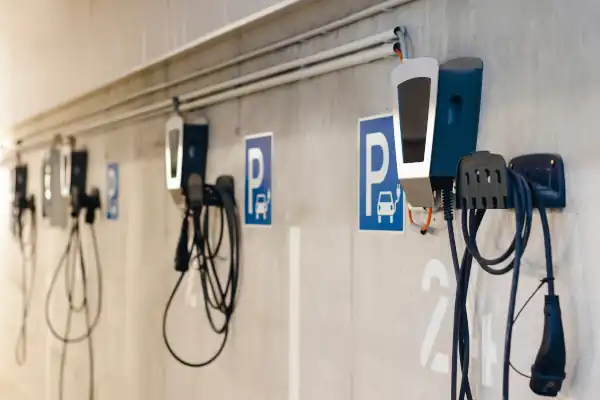
- Decide where charging equipment will be placed in your lots or garage
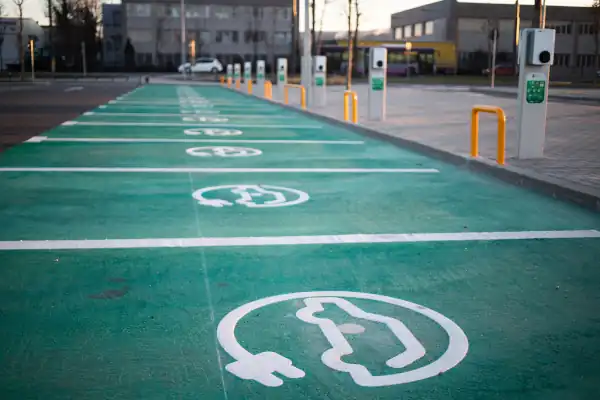
- Plan striping, signage, and accessible paths so stations are visible but don’t block key traffic lanes
Good design balances driver convenience with safety and efficient use of space.
3. Permitting, Codes, and Utility Coordination
Every charging installation must meet multiple regulatory requirements:
- Electrical permits and inspections
- Compliance with electrical codes and local amendments
- ADA‑compliant space dimensions and routes
- Utility approvals for new or upgraded electrical service
Coordinating with local authorities and utilities early reduces the risk of delays or expensive late‑stage changes.
4. Construction, Charging Installation, and Commissioning
The physical work of charging station installations typically includes:
- Trenching or boring for conduit runs, then restoring pavement or landscaping
- Pulling conductors, setting panels or switchgear, and mounting charging equipment
- Final charging installation work at each pedestal or wall location
After construction, each EV charger is commissioned: tested under load, connected to the network, and configured with the correct settings for billing, access control, and monitoring.
Installation Costs and Timelines
Installation costs for commercial EV chargers vary based on charger type, site conditions, and electrical upgrades:
- Level 2 charging equipment generally has lower hardware and installation costs per port, especially when parking is close to existing electrical rooms.
- DC fast charging requires more expensive hardware, heavier wiring, and often utility upgrades, so per‑site costs are significantly higher.
In many cases, once design and permitting are complete, Level 2 charging station installations can be built and commissioned in a few weeks. DC fast charger projects may take longer because of additional utility work and more complex civil construction. The most accurate way to estimate installation costs is to combine a detailed site walk with electrical drawings and utility input before work begins.
EV Charging Infrastructure and Electrical Capacity
Your EV charging infrastructure is only as strong as the power feeding it. Key elements include:
- Adequate electrical service to handle new continuous loads
- Panels, transformers, and switchgear sized for today’s chargers and tomorrow’s expansion
- Conduit, wiring, and connectors designed for outdoor or garage environments
Many projects also incorporate smart load management to balance multiple chargers on the same circuit, letting you serve more electric vehicles without immediately upgrading every part of your electrical system.
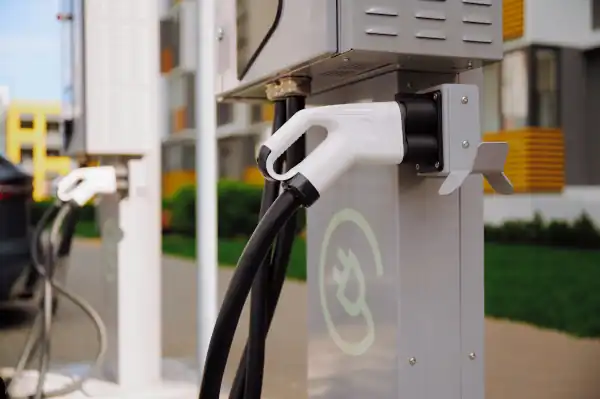
Software, Billing, and Charging System Management
Modern EV charging is driven by software as much as hardware. A networked charging system can:
- Handle customer billing and payment processing
- Manage access for tenants, employees, fleets, or the public
- Monitor charger health, energy use, and uptime
- Provide smartphone apps that help drivers find and use your stations
Choosing the right platform ensures your EV charging infrastructure remains easy to manage and can grow with increasing EV adoption on your property.
What Customers Are Saying
"Stellar service! Free estimate over a zoom call, scheduled install within two days of invoice approval. Super-skilled electricians showed up exactly on time and finished up in less than 30min. Thrilled to take my first steps into the EV world and got oodles of great advice from this team. Definitely recommended!"
- Marietta Engel
"Car Charger Specialists did an amazing job installing our Tesla charger. They were responsive, professional, and worked quickly. Everything was explained clearly, the install looks clean, and the charger works perfectly. We’re really happy with the quality of their work and would absolutely recommend them to anyone needing an EV charger installed."
- Jacob C.
"I had a great experience with installation of the plug for my level 2 charger. Communication was prompt and clear, Lee was on time, friendly, and completed the work quickly. They also can work directly with Duke for the NC EV charger installation credit so you don’t have to send in any paperwork yourself."
- Katie Hoagland
Incentives That Can Offset Installation Costs
The upfront expense of installing EV charging stations can be significant, but many markets offer:
- Federal and state tax credits for qualified alternate‑fuel infrastructure
- Utility rebates for chargers or make‑ready infrastructure
- Grants aimed at expanding public and workplace charging
Working with an experienced partner makes it easier to identify and capture these incentives, bringing your effective installation costs down.
Are You Ready to Install EV Charging Stations?
To decide whether this is the right time to invest in EV charging equipment, consider:
- How many visitors or employees already drive an electric vehicle—and how quickly EV adoption is growing in your area
- Typical parking duration and which type of charging (Level 1 chargers as backup, Level 2 charger banks, or at least one DC fast charger) best fits your use patterns
- Current electrical service capacity and your appetite for phased vs. full build‑out
- Whether you want EV charging to be a free amenity, a paid service, or a mix that creates ongoing revenue
With a clear sense of your goals and constraints, you can design a charging installation that delivers value today and scales as more of your customers, tenants, and employees switch to electric vehicles.
Our Service Area
Car Charger Specialists proudly provides professional commercial and residential EV charger installation throughout North Georgia, serving families and businesses in Alpharetta, Atlanta, Berkeley Lake, Braselton, Brookhaven, Buckhead, Buford, Chamblee, Cumming, Decatur, Duluth, Dunwoody, Flowery Branch, Gainesville, Grayson, Johns Creek, Lawrenceville, Lilburn, Loganville, Milton, Peachtree Corners, Sandy Springs, Smyrna, Snellville, Sugar Hill, Suwanee, and Vinings.
If your property is located in or around these Georgia communities, Car Charger Specialists is ready to help you power the future of transportation with reliable commercial EV charging solutions.
