
Commercial EV Charging Opportunity in Forsyth County
Forsyth County is seeing rapid growth in electric vehicles, and forward-thinking property owners are turning that momentum into a business advantage. Successful commercial EV charging starts with a strategy that aligns installation budgets, utility capacity, and the right charging speeds for your guests, tenants, and employees. Below, Car Charger Specialists outlines what Forsyth County businesses should evaluate before investing in commercial EV charging infrastructure.


5.0 Stars
830 Reviews
How Forsyth County Properties Benefit from EV Charging
Hosting EV charging in Forsyth County isn’t just about green positioning—it’s a concrete way to grow traffic, revenue, and retention across multiple property types:
- Attract and retain customers and tenants – Drivers favor destinations where they can reliably plug in while shopping, dining, working, or staying overnight, improving repeat visits and lease renewals.
- Increase dwell time and on‑site spending – Charging sessions extend visits, lifting basket size and boosting sales across retail, food and beverage, and services.
- Support employees and fleets – Workplace and fleet charging reduces range anxiety, supports commuting benefits, and anchors electrification plans for service vehicles.
- Demonstrate sustainability leadership – Visible infrastructure advances ESG goals, supports corporate reporting, and strengthens RFP responses for prospective tenants.
- Create new revenue opportunities – Networked hardware enables paid sessions, memberships, and time- or energy-based pricing to offset CapEx and ongoing OpEx.
Charger Mix Strategy: Level 2 vs DC Fast by Use Case
Matching charging speed to parking behavior is critical for utilization and ROI.
- Level 1 chargers draw from 120‑volt outlets and add limited range per hour. In commercial settings they’re typically reserved for overflow or low-demand staff parking.
- Level 2 charger options use 208–240 volts and typically add 25–40 miles of range per hour—ideal for retail, hospitality, multifamily, and offices where vehicles remain parked for several hours.
- A DC fast charger (Level 3) provides high‑power direct current for quick turnarounds and is best for travel corridors, high‑volume retail nodes, and fleet waypoints that require rapid charging.
Most Forsyth County properties benefit from a blended approach—deploying Level 2 and DC fast charging based on dwell times and traffic patterns—then scaling ports as adoption and utilization increase. Read about Commercial EV Charger Installation Cumming.

Forsyth County Commercial EV Project Requirements
Successful deployments hinge on careful planning, from early feasibility through commissioning and software setup.
Site and Electrical Readiness Review
A professional assessment looks at:
- Existing electrical service and panel capacity
- Transformer limits and distance to parking areas
- Available parking, traffic flow, and ADA access requirements
In Forsyth County, this review clarifies realistic port counts, potential make‑ready needs, utility coordination, and conduit routes that simplify phased expansion.
System Design, Layout, and Load Management
Once you understand your capacity, the next step is to design an EV charging system that fits your operations and budget:
- Select the mix of Level 2 charger ports and DC fast charger units
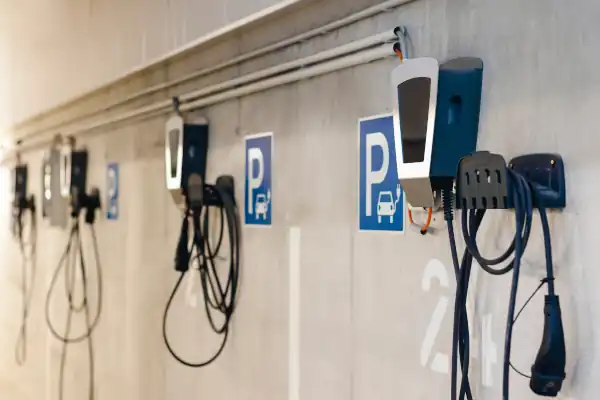
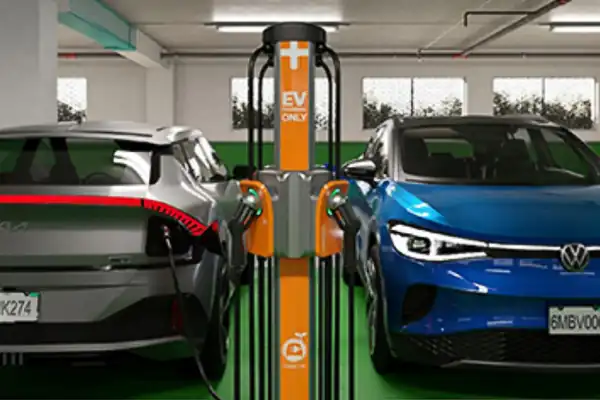
- Decide where charging equipment will be placed in your lots or garage
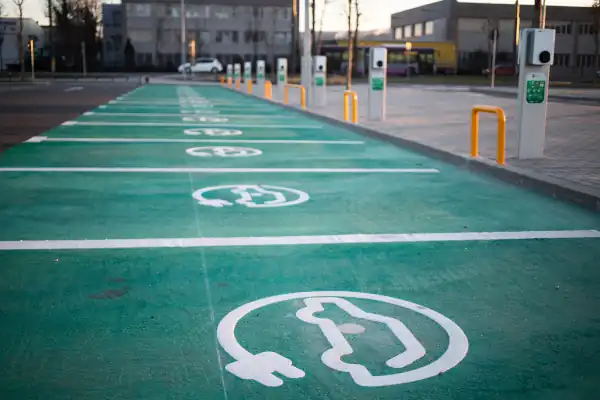
- Plan striping, signage, and accessible paths so stations are visible but don’t block key traffic lanes
Strong designs optimize wayfinding, electrical efficiency, safety, and uptime while preserving premium parking for revenue-generating use.
Permitting, Codes, Utility Coordination, and Make‑Ready
Every charging installation must meet multiple regulatory requirements:
- Electrical permits and inspections
- Compliance with electrical codes and local amendments
- ADA‑compliant space dimensions and routes
- Utility approvals for new or upgraded electrical service
Early engagement with Forsyth County authorities and the serving utility minimizes redesigns, mitigates demand‑charge surprises, and keeps timelines predictable.
Construction, Commissioning, and Service Turn‑Up
The physical work of charging station installations typically includes:
- Trenching or boring for conduit runs, then restoring pavement or landscaping
- Pulling conductors, setting panels or switchgear, and mounting charging equipment
- Final charging installation work at each pedestal or wall location
Commissioning completes the buildout—verifying load, networking, OCPP connectivity, access control, pricing rules, and monitoring so billing and reporting work from day one.
Local Costs, Timelines, CapEx/OpEx, and Demand Charges
Forsyth County project budgets depend on charger type, site conditions, utility proximity, and any make‑ready work:
- Level 2 charging equipment offers lower CapEx per port and faster builds when electrical rooms are near parking and trenching is limited.
- DC fast charging carries higher hardware costs, larger conductors, potential new transformers, and demand‑charge considerations, raising per‑site totals.
After design and permits, many Level 2 installations can be completed within weeks. DC fast charging typically takes longer due to utility upgrades and heavier civil work. The most accurate way to budget is a detailed site walk, electrical drawings, and utility input—paired with incentive screening to reduce net CapEx and OpEx.
Uptime, Maintenance, and Service Levels On‑Site
Your EV charging infrastructure is only as strong as the power feeding it. Key elements include:
- Adequate electrical service to handle new continuous loads
- Panels, transformers, and switchgear sized for today’s chargers and tomorrow’s expansion
- Conduit, wiring, and connectors designed for outdoor or garage environments
To stretch capacity and control OpEx, many Forsyth County sites deploy dynamic load balancing and scheduled charging. These tools prioritize uptime, support more ports without immediate service upgrades, and mitigate peak demand charges while maintaining a high-quality driver experience.
Network, Payments, OCPP, and Access Control Options
For Forsyth County property owners, the real value of commercial EV charging comes from smart software that controls revenue, reliability, and scale. A flexible, OCPP‑compatible platform helps sites across retail, hospitality, multifamily, and office settings meet different user needs while protecting margins.
- Handle customer billing and payment processing
- Manage access for tenants, employees, fleets, or the public
- Monitor charger health, energy use, and uptime
- Provide smartphone apps that help drivers find and use your stations
Car Charger Specialists configures networks with load balancing, demand‑charge mitigation, and role‑based access so your site can support paid sessions, memberships, or time‑of‑day pricing. As utilization grows, you can add ports, adjust tariffs, and integrate with parking systems without disrupting operations.
What Customers Are Saying
"Stellar service! Free estimate over a zoom call, scheduled install within two days of invoice approval. Super-skilled electricians showed up exactly on time and finished up in less than 30min. Thrilled to take my first steps into the EV world and got oodles of great advice from this team. Definitely recommended!"
- Marietta Engel
"Car Charger Specialists did an amazing job installing our Tesla charger. They were responsive, professional, and worked quickly. Everything was explained clearly, the install looks clean, and the charger works perfectly. We’re really happy with the quality of their work and would absolutely recommend them to anyone needing an EV charger installed."
- Jacob C.
"I had a great experience with installation of the plug for my level 2 charger. Communication was prompt and clear, Lee was on time, friendly, and completed the work quickly. They also can work directly with Duke for the NC EV charger installation credit so you don’t have to send in any paperwork yourself."
- Katie Hoagland
Forsyth Incentives, Utility Programs, and Make‑Ready Support
Launching EV charging in Forsyth County can be more affordable than many owners expect. We help sites line up funding pathways and reduce both CapEx and OpEx through:
- Federal and state tax credits for qualified alternate‑fuel infrastructure
- Utility rebates for chargers or make‑ready infrastructure
- Grants aimed at expanding public and workplace charging
Car Charger Specialists identifies stackable incentives, coordinates utility make‑ready, and structures projects to maximize eligibility. The result: lower upfront costs, faster ROI, and a smoother path to operational revenue.
Start Your Forsyth County EV Charging Plan
Before committing capital, evaluate how commercial EV charging can drive revenue, retention, and sustainability outcomes for your Forsyth County property:
- Current and projected EV traffic at your site—consider visitor mix, employee counts, and nearby charger scarcity to forecast utilization
- Parking dwell times to select the right charger mix: Level 2 for retail, restaurants, offices, and multifamily; DC fast charging for highway-adjacent or high‑turnover locations; Level 1 only as limited overflow
- Existing electrical capacity, make‑ready needs, and whether a phased rollout reduces CapEx and demand charge risk while preserving future expansion
- Monetization strategy: paid sessions, time‑based pricing, memberships for tenants, or a hybrid approach that boosts parking dwell and basket size
With clear objectives and constraints, Car Charger Specialists will design a scalable plan—balancing Level 2 and DCFC, network and payment selection, and load management—to produce dependable ROI as EV adoption accelerates across Forsyth County.
Our Service Area
Car Charger Specialists proudly provides professional commercial and residential EV charger installation throughout North Georgia, serving families and businesses in Alpharetta, Atlanta, Berkeley Lake, Braselton, Brookhaven, Buckhead, Buford, Chamblee, Cumming, Decatur, Duluth, Dunwoody, Flowery Branch, Gainesville, Grayson, Johns Creek, Lawrenceville, Lilburn, Loganville, Milton, Peachtree Corners, Sandy Springs, Smyrna, Snellville, Sugar Hill, Suwanee, and Vinings.
If your property is located in or around these Georgia communities, Car Charger Specialists is ready to help you power the future of transportation with reliable commercial EV charging solutions.
