
Everything About EV Charging
Electric vehicle charging can seem complicated at first. Terms like Level 1, Level 2, DC fast charging, CCS, NACS, kilowatts, and kilowatt-hours can make it difficult to know what charger you need or how quickly your EV can charge.
The good news is that EV charging becomes much easier to understand once you know the basics.
Whether you are considering your first electric vehicle, installing a charger at home, or simply trying to understand the different charging options available, this guide explains how EV charging works, what the different charger levels mean, how charging speeds are measured, and how today’s charging standards fit together.
Schedule Your Free Consultation!
What Is EV Charging?
EV charging is the process of transferring electrical energy from a power source into an electric vehicle’s battery. Unlike a gasoline vehicle, which stores energy in a fuel tank, an EV stores energy chemically inside a high-voltage battery pack.
When you plug an EV into a charging station, electricity travels through the charging equipment and vehicle charging system before reaching the battery. The vehicle controls how much power it can safely accept based on factors such as battery temperature, state of charge, charger capability, and the vehicle’s maximum charging rate.
EV charging can happen at home, at workplaces, at public charging stations, or at other destinations.
For most EV owners, home charging is the most convenient option because the vehicle can charge while parked overnight or throughout the day. Public charging becomes particularly useful for longer trips and situations where additional range is needed quickly.
Types of EV Chargers
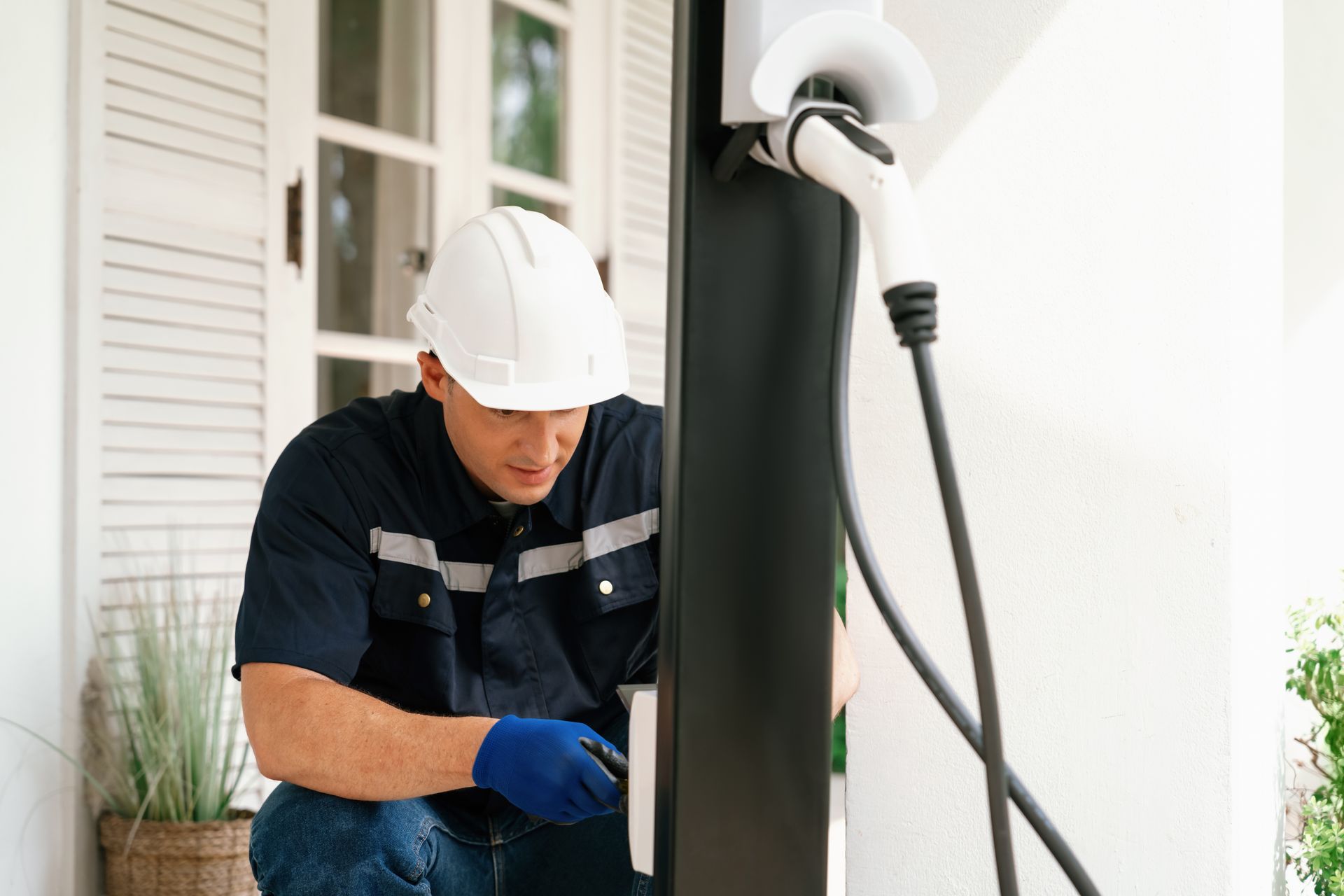
EV chargers are generally categorized by how much electrical power they provide and whether they deliver alternating current (AC) or direct current (DC).
The three commonly recognized charging levels are:
- Level 1: The slowest type of EV charging, typically using a standard household electrical outlet.
- Level 2: Faster AC charging commonly used in homes, workplaces, apartments, and public charging locations.
- Level 3: DC fast charging designed to add significant range in a relatively short amount of time.
The charger itself is only part of the equation. An EV’s onboard charging equipment, battery capacity, electrical system, and charging limits also determine how quickly energy can actually enter the battery.
AC vs. DC Charging
The biggest difference between common EV charging systems is whether they provide AC or DC electricity to the vehicle.
AC charging supplies alternating current to the vehicle. The EV’s onboard charger converts that AC electricity into DC electricity that the battery can store. Level 1 and Level 2 charging are AC charging methods.
DC charging sends direct current to the vehicle’s battery without relying on the vehicle’s onboard AC charger to perform that conversion. This allows substantially higher charging power and is why DC fast chargers are used for rapid charging.
In simple terms:
AC charging: Electricity → vehicle’s onboard charger → battery
DC charging: Electricity → charging station → battery
This difference is one of the primary reasons DC fast charging can be dramatically faster than typical home charging.
Level 1 Charging
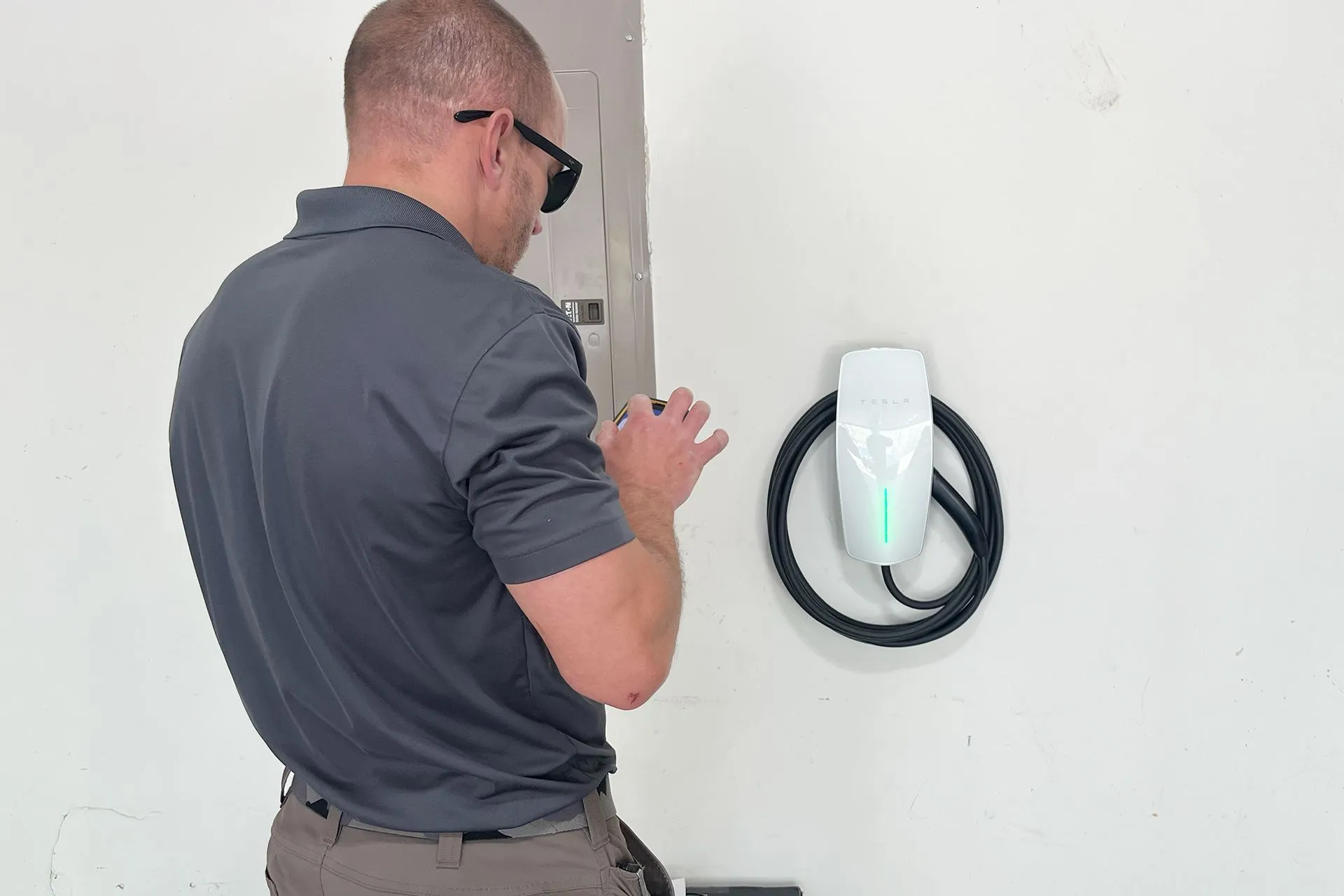
Level 1 is the simplest form of EV charging. It typically uses a standard household electrical outlet and requires little or no special electrical installation.
Because Level 1 charging operates at relatively low power, it is best suited to drivers with modest daily mileage or those who can leave their vehicle plugged in for extended periods.
Level 1 can be useful for:
- Plug-in hybrid vehicles
- Low-mileage EV drivers
- Overnight charging
- Homes where installing a faster charger is impractical
- Supplemental charging
The tradeoff is speed. A large EV battery can take many hours, or potentially more than a day, to replenish substantially from a low state of charge using Level 1.
Level 2 Charging
Level 2 is the most common choice for residential EV charging when drivers want significantly faster charging than a standard household outlet can provide.
Level 2 chargers use higher-voltage AC electricity and generally require a dedicated electrical circuit. They are commonly installed in garages, driveways, workplaces, apartment buildings, and public parking facilities.
Depending on the vehicle and charging equipment, Level 2 can provide enough energy during an overnight charging session to cover most drivers’ daily driving needs.
For homeowners, Level 2 is often the sweet spot between installation cost, charging speed, and everyday convenience.
Before installing one, however, the home’s electrical panel, available capacity, wiring, breaker requirements, and charger specifications should be evaluated by a qualified electrician.
Level 3 Charging
Level 3 is commonly used to describe DC fast charging.
Unlike Level 1 and Level 2, Level 3 charging does not rely on the vehicle’s onboard AC charger to convert incoming electricity. Instead, the charging station supplies DC power directly to the vehicle’s battery.
Modern DC fast chargers can provide substantially more power than residential Level 2 equipment. However, actual charging speed varies considerably between vehicles and chargers.
DC fast charging is particularly useful for:
- Road trips
- Highway travel
- Fleet vehicles
- Drivers who need additional range quickly
- Public charging locations
Charging speed also typically decreases as the battery approaches a high state of charge. This is why charging from roughly 10% to 80% can be much faster than charging from 80% to 100%.
CCS vs. NACS
CCS and NACS are two important EV charging connector standards in North America.
CCS, or Combined Charging System, combines the J1772 AC connector with additional DC charging pins. CCS has been widely used by many automakers for both AC and DC charging.
NACS, or North American Charging Standard, is the connector design originally developed by Tesla and now being adopted broadly across the North American EV industry.
The transition toward NACS has changed the charging landscape significantly. Many newer EVs are being designed with NACS ports, while adapters can allow some vehicles with other connectors to access different charging networks.
Connector compatibility is important when selecting a public charging station, because the physical connector must match the vehicle or an appropriate adapter must be available and supported.
J1772 Explained
J1772 is a widely used North American standard for AC EV charging.
The SAE J1772 connector has been used extensively with Level 1 and Level 2 charging and became a familiar connector for many non-Tesla electric vehicles and plug-in hybrids.
A J1772 connection handles AC power. It does not, by itself, provide DC fast charging.
Many EVs with J1772 ports can use DC fast charging through a separate connector configuration, historically most commonly CCS.
As automakers transition toward NACS, J1772 remains important because millions of existing EVs, plug-in hybrids, and charging stations use the standard.
Tesla Charging Standards
Tesla has used its own charging connector design in North America for years. That connector is now known as NACS.
Tesla vehicles can use Tesla’s charging network as well as other compatible charging infrastructure, depending on the vehicle, connector, adapter, and charging network involved.
The broader industry adoption of NACS means the distinction between “Tesla charging” and “non-Tesla charging” is becoming less clear. Increasingly, NACS is simply another major charging standard used throughout the North American EV market.
When determining compatibility, always check the specific vehicle model, model year, charging port, adapter requirements, and charging network.
Charging Speeds Explained
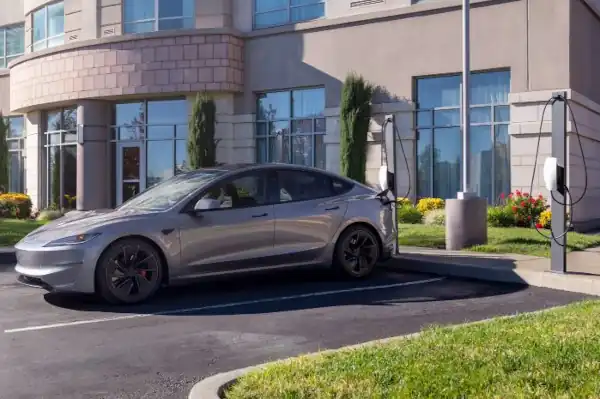
EV charging speed is generally described in kilowatts (kW).
A charger capable of delivering more kilowatts can potentially transfer energy into the vehicle faster. However, the vehicle ultimately determines how much power it can accept.
For example, connecting an EV that can accept 50 kW to a 150 kW DC fast charger does not mean the vehicle will charge at 150 kW.
Charging speed can also change throughout a charging session. Many EVs accept their highest charging rates at lower battery states of charge and gradually reduce power as the battery fills.
Other factors that can affect charging speed include:
- Battery temperature
- Battery state of charge
- Vehicle charging limits
- Charger output
- Electrical conditions
- Charging station load
- Battery management software
This is why a charger advertised as “fast” does not necessarily provide the same real-world charging experience for every EV.
Kilowatts vs. Kilowatt-Hours
One of the most important EV charging concepts is understanding the difference between kilowatts (kW) and kilowatt-hours (kWh).
A kilowatt measures power—essentially the rate at which energy is being delivered.
A kilowatt-hour measures energy—the amount of energy stored or consumed over time.
Think of it this way:
kW = how fast
kWh = how much
A 10 kW charger delivering power for one hour would theoretically provide 10 kWh of energy, assuming ideal conditions.
Your EV’s battery capacity is commonly expressed in kWh. Charging equipment is commonly described by its power output in kW.
Understanding this distinction makes it much easier to compare EV batteries, charging stations, electricity consumption, and charging times.
How EV Batteries Charge
An EV battery does not simply receive electricity at one constant rate from beginning to end.
The vehicle’s battery management system carefully controls charging to protect the battery and manage temperature, voltage, current, and other operating conditions.
Charging commonly follows a pattern in which power can be relatively high when the battery is at a lower state of charge, followed by a gradual reduction as the battery approaches full capacity.
This is known as the charging curve.
The charging curve is one reason an EV advertised as capable of extremely high charging power may not maintain that maximum rate throughout an entire charging session.
Battery temperature also matters. A battery that is too cold or too hot may charge more slowly. Some EVs can precondition the battery before arriving at a DC fast charger, bringing it closer to an ideal temperature for rapid charging.
30+ Years of experience
Licensed & Trusted by thousands
How Long Does EV Charging Take?
There is no single answer because charging time depends on the vehicle, battery size, starting state of charge, charger output, and charging curve.
A simplified calculation is:
Charging time ≈ Energy needed ÷ Charging power
For example, adding 40 kWh from a 10 kW charger would theoretically take about four hours. Real-world charging takes longer or varies because charging is not perfectly efficient and power may decrease during the session.
For this reason, EV charging is better understood in terms of how much range you can add during a typical charging session rather than assuming every charger operates at its maximum advertised output continuously.
Which EV Charger Is Right for You?
For most EV owners, the right charging setup depends primarily on how much you drive and where your vehicle spends most of its time.
Level 1 may be enough if you drive relatively little and have plenty of time to charge.
Level 2 is generally the most practical home solution for drivers who want faster overnight charging and a convenient daily charging routine.
DC fast charging is primarily designed for rapid charging away from home, particularly during long-distance travel.
Understanding these differences can help you choose charging equipment based on your actual needs rather than simply selecting the charger with the highest advertised power.
Explore More About EV Charging
This guide provides the foundation for understanding EV charging, but each topic deserves a deeper look. As you explore EV ownership, you may want to learn more about home charger installation, charging costs, charging networks, connector compatibility, battery health, charging times, and choosing the right equipment.
Use the supporting guides below to dive deeper into each part of EV charging:
- Types of EV Chargers
- AC vs. DC Charging
- Level 1 EV Charging
- Level 2 EV Charging
- Level 3 & DC Fast Charging
- CCS vs. NACS
- J1772 Explained
- Tesla Charging Standards
- EV Charging Speeds Explained
- Kilowatts vs. Kilowatt-Hours
- How EV Batteries Charge
As the central guide in this EV charging resource, this page should serve as the starting point for understanding the technology and navigating the more detailed charging topics that follow.
